Judging Cannabis Ripeness by Trichomes: The Professional Grower’s Method for Maximum Potency By Jeff Zorn / CTU
Cannabis Training University Guest Blog By Jeff Zorn
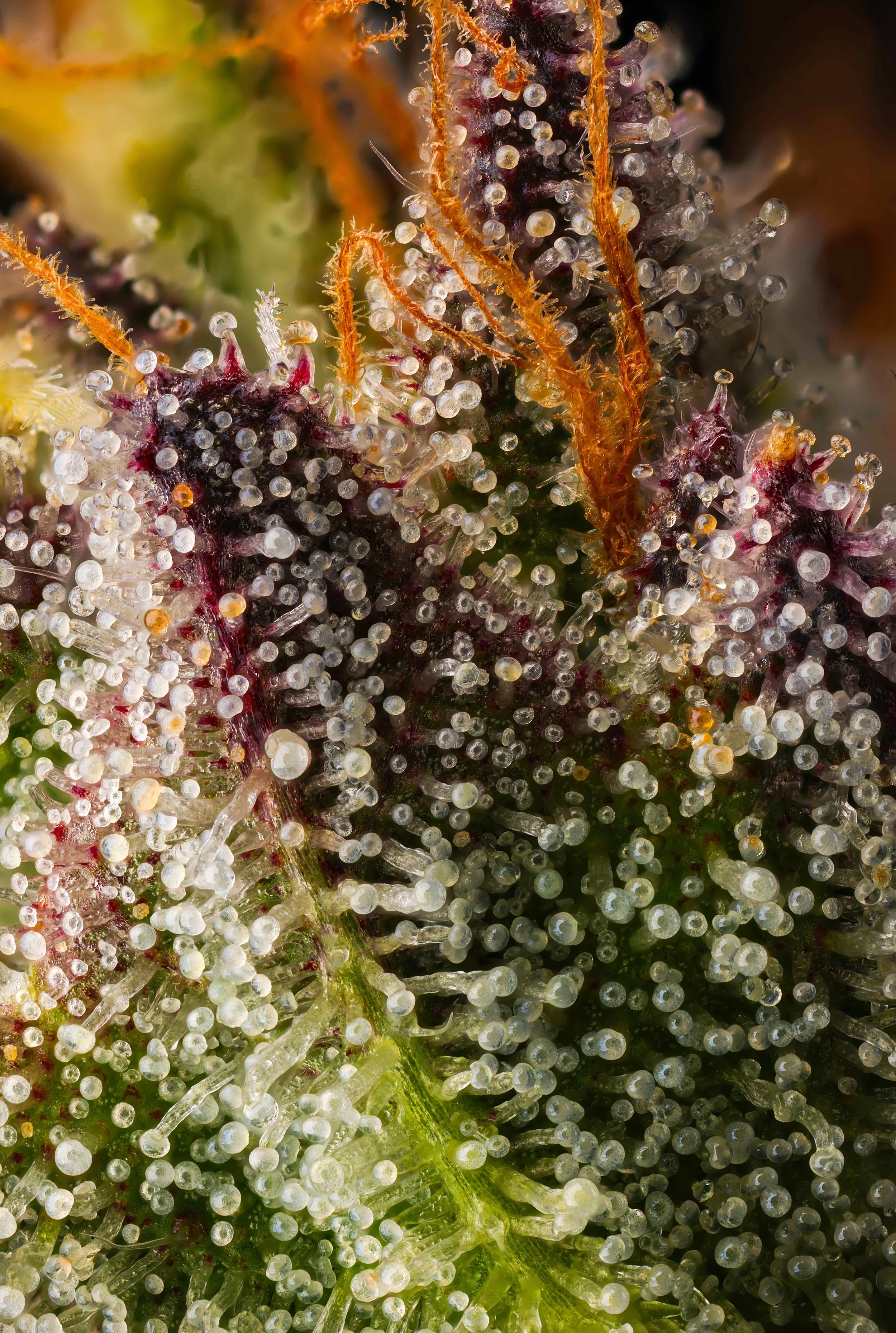
Clear, milky, and amber trichomes at different stages of maturity on California Sour Diesel Autoflower by Humboldt Seed Company. Photo by Ginja.Club.
Knowing when to harvest cannabis is one of the most critical decisions a grower will ever make—and one of the most misunderstood. Harvest too early, and potency, aroma, and flavor are all compromised. Harvest too late, and THC begins to degrade, shifting effects and dulling terpene expression. Despite its importance, many growers still rely on visual shortcuts that don’t accurately reflect what’s happening inside the plant.
For years, pistil color has been treated as the go-to indicator of cannabis maturity. While pistils can suggest where a plant is in its flowering cycle, they do not reliably measure cannabinoid or terpene development. Modern cultivation—both commercial and craft—has moved beyond surface-level cues.
Today, professional growers determine harvest timing by examining trichome maturity under magnification. Trichomes are the resin glands responsible for producing THC, CBD, and aromatic terpenes, making them the most accurate indicators of chemical readiness. By observing trichome color and structure, growers can precisely time harvests for maximum potency, desired effects, and peak flavor.
In this guide, Cannabis Training University breaks down the trichome-based harvesting method used by professional cultivators, explaining why it works, how to evaluate trichomes correctly, and how subtle timing decisions directly influence the final experience of the finished flower.
Quick Read: Harvest Timing at a Glance
If you’re short on time, this article explains how professional growers determine cannabis ripeness using trichome maturity—not pistil color—to time harvests for maximum potency and desired effects.
FAQ: Judging Cannabis Ripeness by Trichomes
Q: What is the best way to tell when cannabis is ready to harvest?
The most accurate way to determine harvest timing is by examining trichomes under magnification. When most trichomes are milky with a small percentage turning amber, cannabinoids and terpenes have reached peak development.
Q: Are milky or amber trichomes better for harvesting cannabis?
Milky trichomes indicate peak THC levels and balanced effects, while amber trichomes signal THC converting into CBN, producing more sedative effects. Most growers harvest when 80–90% of trichomes are milky with 5–15% amber.
With the basics covered, the following sections explain in detail why trichome development is the gold standard for judging cannabis ripeness.
Why Pistils Don’t Tell the Whole Story
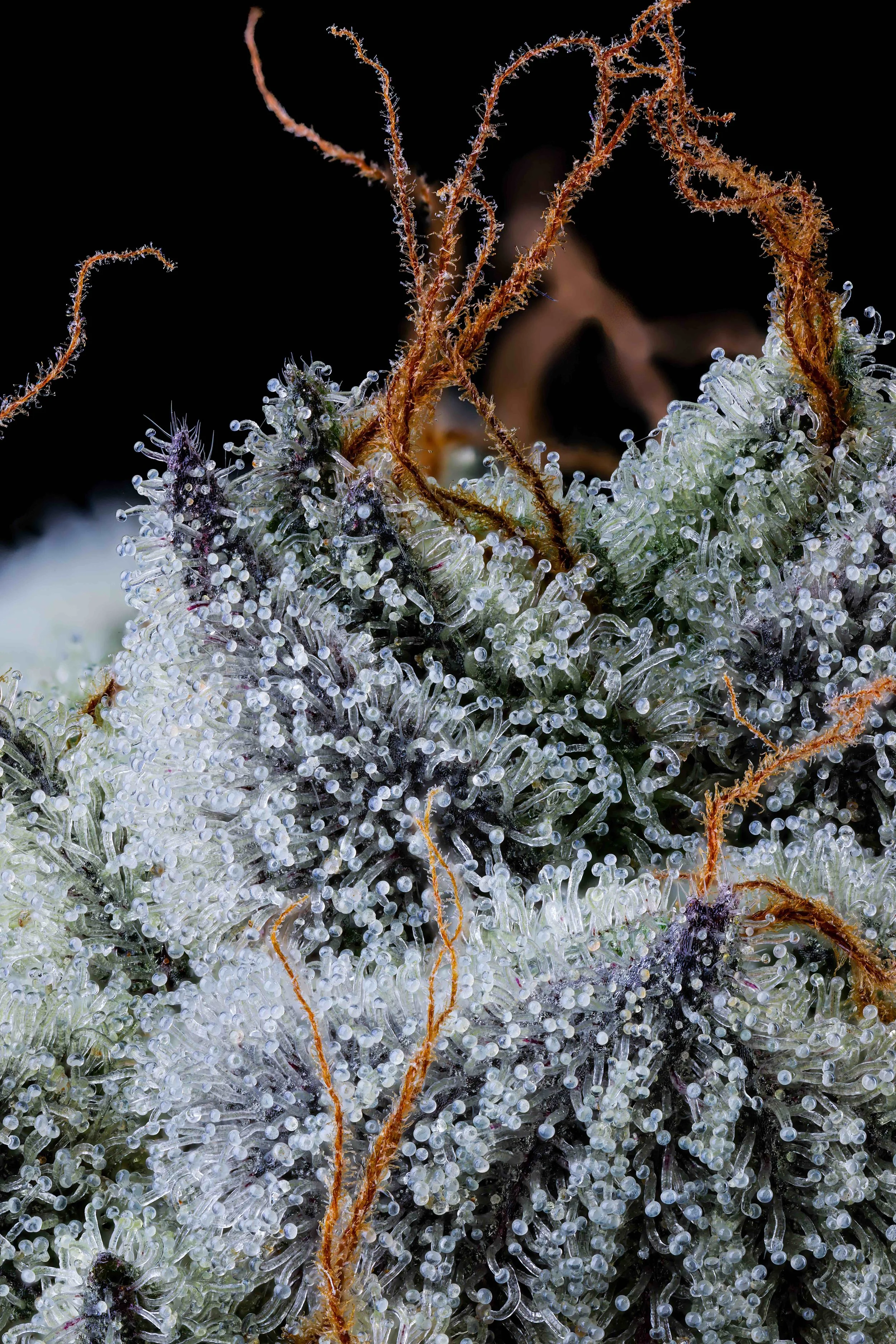
The reddish hair-like strands are pistils, which often darken before trichomes reach full maturity—showing why pistil color alone isn’t a reliable indicator of when cannabis is ready to harvest. Photo by Ginja.Club.
Pistils—the hair-like structures on cannabis flowers—do change color as plants mature, typically shifting from white to orange, red, or brown. While pistil color can provide a general sense of flowering progression, it does not reliably indicate chemical maturity.
Why pistil color is unreliable
Pistil coloration is influenced by multiple external factors that have nothing to do with cannabinoid or terpene development, including:
Environmental stress
Genetic variation
Wind, handling, or physical contact
Artificial lighting spectrum
Pollination signals
Nutrient fluctuations
It’s entirely possible for a cannabis plant to show 70% dark pistils while its trichomes remain largely clear and underdeveloped. In this case, the plant appears mature visually but is chemically immature where potency matters most.
Relying on pistils alone increases the risk of harvesting too early, resulting in reduced THC levels and altered effects.
Trichomes: The True Meters of Cannabis Maturity
Trichomes are the resin-producing glands where cannabinoids and terpenes are synthesized and stored. Because of this, trichome development is the most accurate indicator of cannabis ripeness.
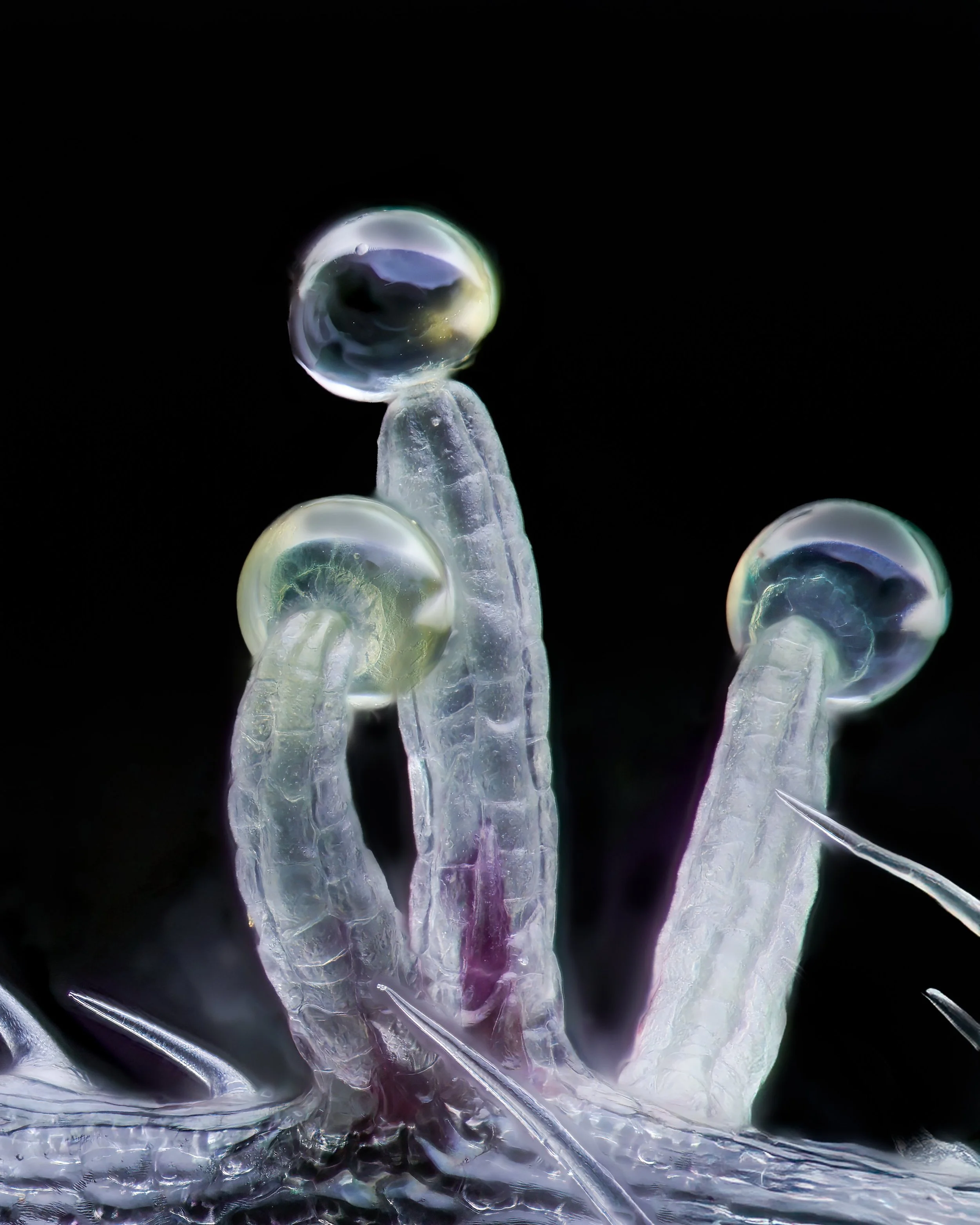
Capitate-stalked trichomes with resin-filled gland heads—responsible for THC, CBD, and terpene production—appear alongside spiky cystolithic trichomes, non-glandular hairs that add texture but contribute little to chemical potency. Photo by Ginja.Club.
Trichomes are the resin-producing glands where cannabinoids and terpenes are synthesized and stored. Because of this, trichome development is the most accurate indicator of cannabis ripeness.
As trichomes mature, they progress through distinct visual stages—each corresponding to a different chemical profile and effect.
Clear Trichomes — Immature (Low Potency)
Clear trichomes appear glassy and transparent. At this stage, cannabinoids are still forming and resin production is incomplete.
Harvesting cannabis at this stage typically results in:
Lower THC concentration
Weak terpene expression
Reduced flavor and aroma
Milky / Cloudy Trichomes — Peak THC Production
When trichomes turn milky or cloudy, THC concentration has reached its highest level. This stage represents peak psychoactive potency for most cultivars.
Most growers target this phase for balanced effects, strong aroma, and maximum yield quality.
Amber Trichomes — More Sedative Effects
As trichomes oxidize, they shift from cloudy to amber. During this process, THC gradually degrades into CBN, which is associated with:
More sedative, body-heavy effects
Increased “couch-lock”
Reduced cerebral intensity
A higher amber ratio produces a heavier, more relaxing experience.
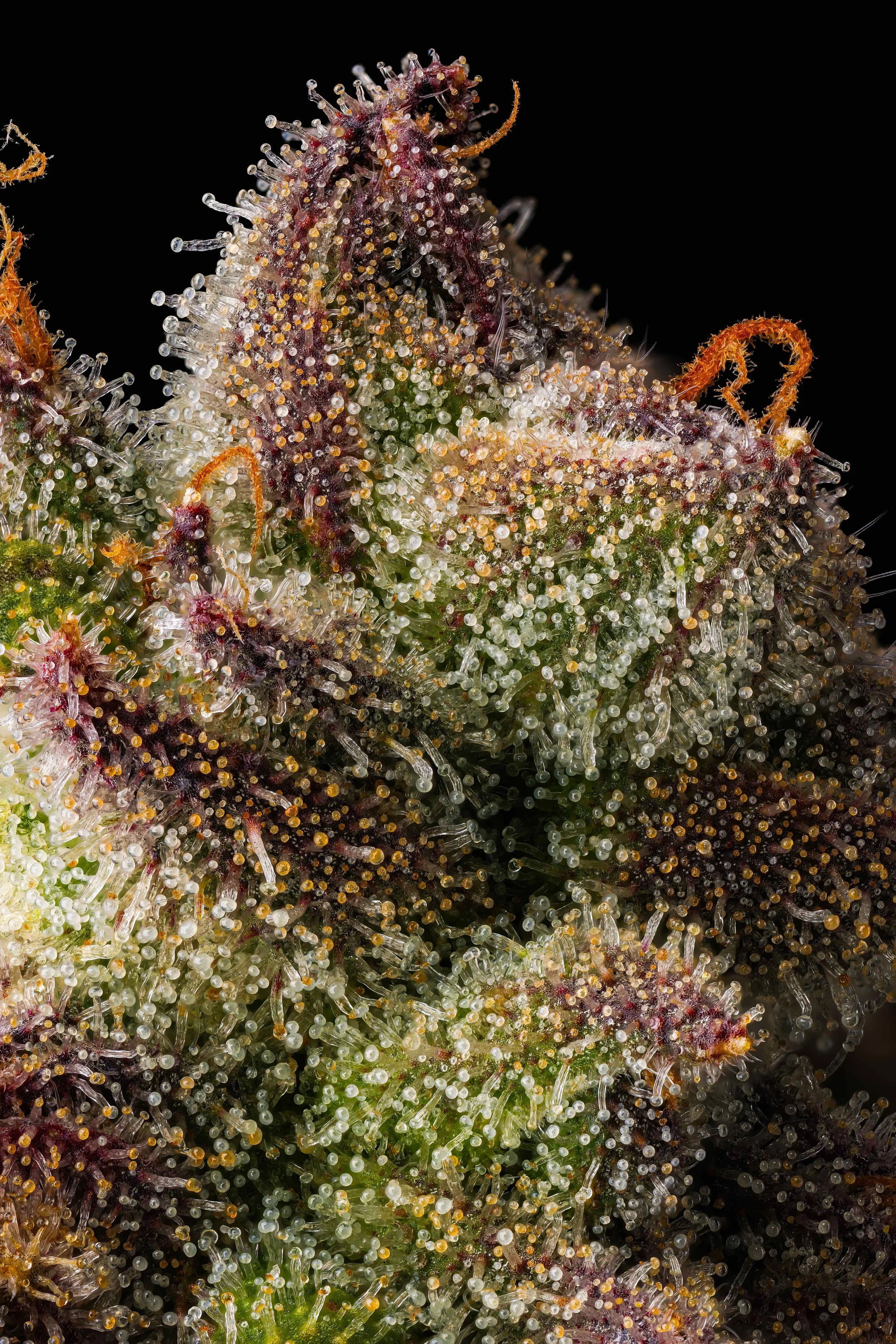
This flower shows a high percentage of amber trichomes, indicating THC has begun converting into CBN—an effect often preferred by growers and patients seeking deeper relaxation, body-heavy sedation, and nighttime use. Photo by Ginja.Club.
The Professional Standard for Harvest Timing
Professional growers don’t guess—they harvest based on trichome ratios. This method has become the industry standard because it directly reflects cannabinoid maturity inside the resin glands.
Optimal trichome ratio for most cultivars
Peak cannabinoid maturity typically occurs when:
80–90% of trichomes are milky/cloudy
5–15% of trichomes are amber
This range consistently delivers:
Maximum THC potency
Fully developed terpene profiles
Balanced effects without over-sedation
Strong aroma and flavor retention
Growers seeking more uplifting effects may harvest slightly earlier, while those targeting heavier nighttime effects may allow more amber development.
How to Analyze Trichomes Correctly
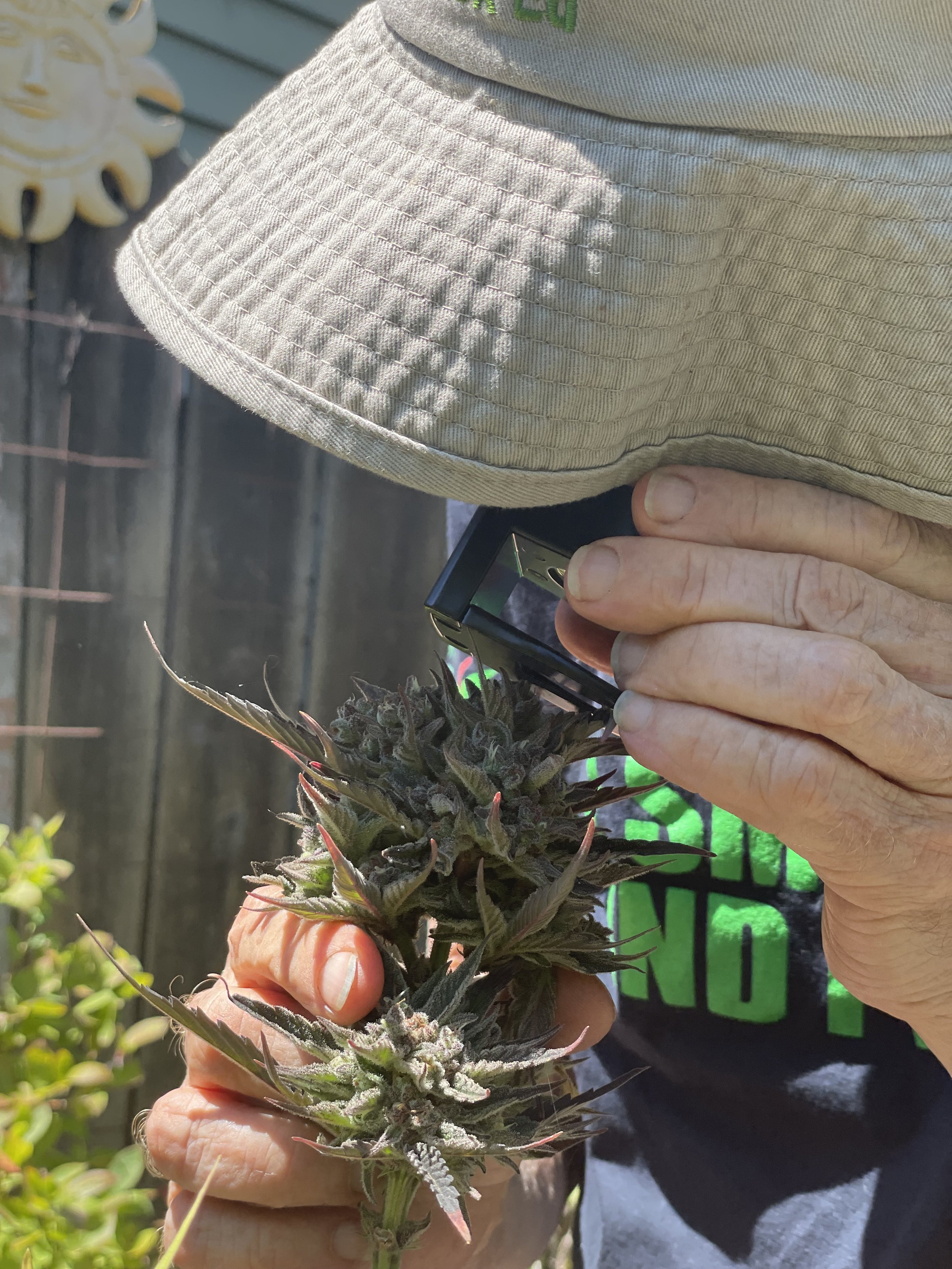
Ed Rosenthal using a 30× loupe to examine trichome maturity on an outdoor cannabis flower—an essential step in accurately judging harvest ripeness beyond pistil color. Photo by Christian Petke
To accurately judge cannabis ripeness by trichomes, magnification is essential.
Recommended tools
Jeweler’s loupe (30×–60×)
USB microscopes (ideal for documentation)
Digital macro lens attachments for smartphones
Best practices for evaluation
Inspect buds, not sugar leaves — sugar leaves mature faster
Check multiple bud sites — tops mature before lower branches
Observe repeatedly — trichomes can change quickly late in flower
Focus on gland heads — stalks alone don’t indicate maturity
Use natural or white light — LED grow lights distort color
Experience improves interpretation, but magnification remains essential.
What Happens If You Harvest Too Early or Too Late?
Harvesting too early
Reduced THC levels
Harsh smoke
Weak aroma
Underdeveloped terpene profiles
Potentially more anxiety-prone effects
Harvesting too late
Decreasing THC, increasing CBN
Heavier sedative effects
Increased mold risk in high humidity
Degraded terpene expression
While minor timing adjustments may be intentional, large errors can significantly reduce quality.
The Final Days: Slow Down and Observe
During the final week of flowering, trichomes can change daily. This stage requires patience and close observation.
Helpful practices include:
Taking daily macro photographs
Comparing different areas of the plant
Maintaining stable humidity (45–50%)
Reducing excessive light intensity to preserve terpenes
The final 3–7 days often determine whether harvested cannabis is good, excellent, or truly exceptional.
Why Trichome-Based Harvesting Is the Professional Standard
Modern cannabis cultivation is precision-driven. Both commercial and craft growers rely on trichomes because they provide:
Consistent harvest results
Accurate control over potency and effects
Higher quality flower for consumers and patients
Strain-specific cannabinoid expression
Pistils can provide a hint.
Experience can provide intuition.
But trichomes provide certainty.
Learn More About Cannabis Growing
Understanding trichome maturity is just one element of successful cannabis cultivation. Lighting, nutrients, environment, genetics, and post-harvest handling all play critical roles.
This insight is drawn from Cannabis Training University’s free educational resources. Growers looking to deepen their knowledge can explore CTU’s guides, training materials, and cannabis eBooks anytime.