
Why Cannabis (Ganja) Should Be Re-Legalized in India By Ed Rosenthal
Introduction: Returning to India With Purpose

Ed Rosenthal smoking a chillum in India in 1981 as a police officer lights it, during a period when cannabis cultivation was legal and regulated.
When I first visited India in 1981, cannabis cultivation was still legal in certain regions. During that trip, I photographed a large, government-regulated ganja farm—an experience that left a lasting impression. The plants were grown openly, harvested responsibly, and taxed by the state.
Today, cultivation is no longer legal anywhere in India. Yet cannabis remains widely available throughout the country—typically of poor quality, harvested prematurely before flowering, and sold through unregulated channels. Prohibition has not eliminated cannabis use; it has simply ensured inferior products while generating no public benefit.
On earlier trips, I came to India as a tourist. This time, I returned with a purpose: to support the growing re-legalization movement and to help spark what civil rights leader John Lewis once called “good trouble.” At a recent meeting with activists, I was asked to outline clear reasons why India should re-legalize ganja. That outline is now circulating throughout the country.
What follows is a practical, historically grounded case for reform.
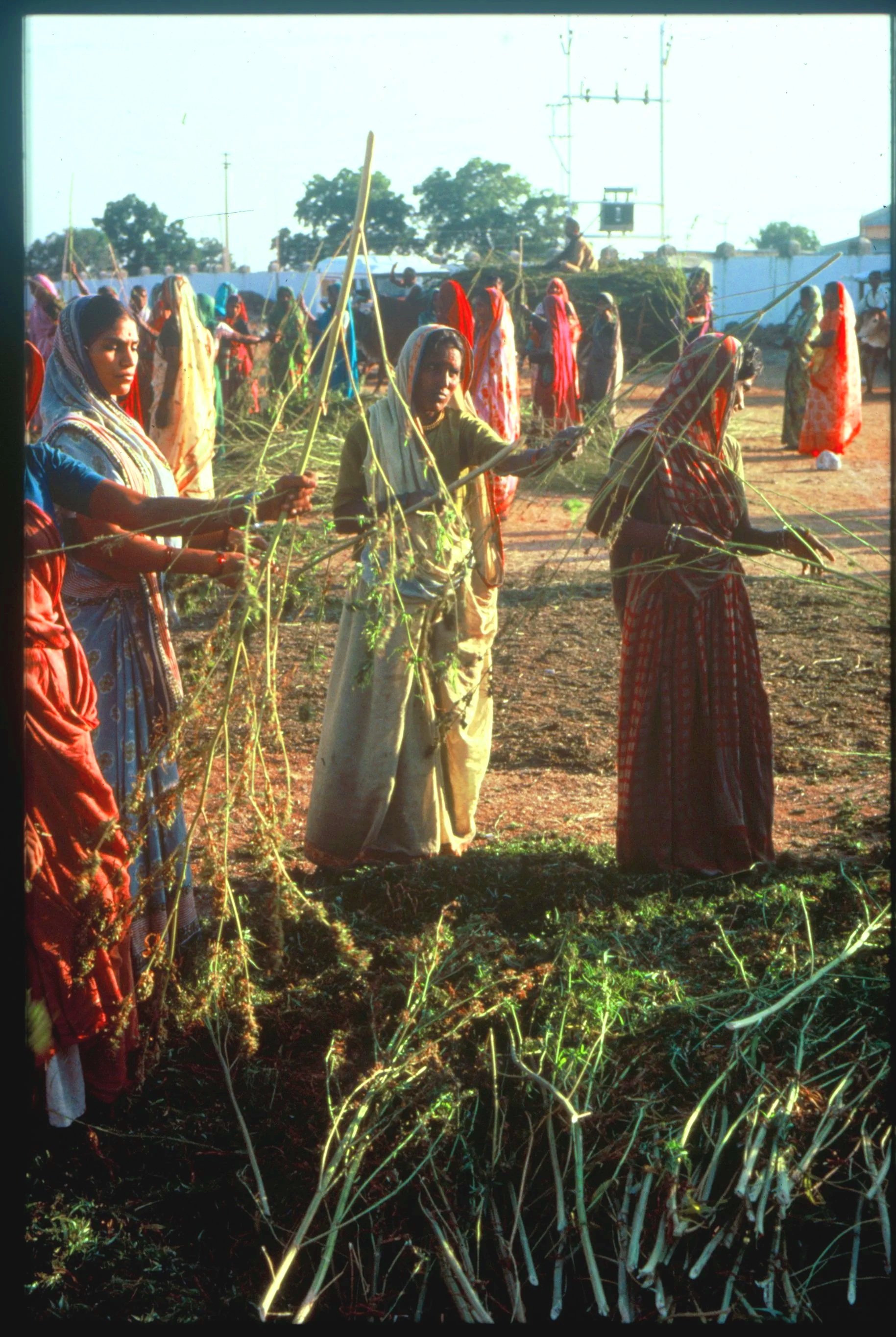
Women processing freshly harvested cannabis at a government-regulated ganja farm in India during my 1981 visit—part of a legal agricultural system that no longer exists.
Cannabis and India — A Deep Historical Relationship
Cannabis is not foreign to India. The plant originated in Central and South Asia and has grown naturally in the Himalayan foothills for millions of years. Humans have used cannabis on the subcontinent for at least 10,000 years—for food, fiber, medicine, ritual, and pleasure.
For centuries, ganja and charas were cultivated, traded, regulated, and taxed. Cannabis use was woven into daily life, Ayurvedic medicine, and religious practice long before modern drug laws existed.
How Cannabis Became Illegal in India
Cannabis prohibition in India did not arise from indigenous culture or medical evidence. It was the result of international pressure.
In 1961, India signed the United Nations Single Convention on Narcotic Drugs, agreeing to ban cannabis within 25 years. This commitment led to the Narcotic Drugs and Psychotropic Substances (NDPS) Act of 1985, which criminalized the cultivation, sale, and possession of cannabis flowers and resin.
The Bhang Exception
One notable exception remains: bhang, made from cannabis leaves, was excluded from the ban due to its religious and cultural significance. This legal distinction exposes a contradiction—one part of the plant is accepted, while another is criminalized, despite similar effects and shared history.
Why India’s Cannabis Laws Are Ineffective
Cannabis Is Widely Available Despite Prohibition
After nearly four decades of prohibition, ganja and charas remain easy to obtain across India. Criminalization has failed to reduce demand or supply. Instead, it has pushed cannabis into an unregulated underground market.
Poor Quality and Premature Harvesting
Because cultivation is illegal, growers often harvest plants early to reduce risk. The result is cannabis of poor quality, low potency, and inconsistent effects. Prohibition has degraded the plant itself.
Enforcement Encourages Corruption
When a widely used plant is illegal, enforcement becomes selective. This fosters bribery and corruption while diverting law enforcement resources away from serious crimes. Over time, the law loses credibility.
Public Health and Safety Considerations
In legal cannabis markets, products are tested for pesticides, heavy metals, and microbial contamination. In India’s unregulated market, consumers have no such protections.
Prohibition also produces unintended consequences. When cannabis becomes scarce due to enforcement actions, some users turn to alcohol—an intoxicant associated with greater social and health harms.
Regulation allows risk to be managed responsibly.
Economic and Scientific Opportunities
Lost Tax Revenue and Rural Opportunity
India forfeits significant revenue by keeping cannabis illegal. A regulated market could generate tax income, create agricultural jobs, and support rural economies—especially in regions where cannabis grows naturally.
Protecting India’s Landrace Cannabis Genetics
India is home to unique landrace cannabis varieties—genetically distinct plants shaped by geography, climate, and centuries of open pollination. These landraces contain rare cannabinoid and terpene profiles with potential medical and scientific value.
Under prohibition, these genetics are neither studied nor protected—and are often exported illegally with no benefit to India.
Barriers to Medical Research
Indian pharmaceutical companies are currently restricted to immature cannabis plants with low cannabinoid content. Legal access to mature flowers would enable meaningful research and allow India to compete globally in cannabis-based medicine.
Cultural and Religious Significance
Cannabis has long played a role in Indian religious traditions, particularly in connection with Shiva and festivals such as Holi and Shivaratri. While bhang remains legal, the continued prohibition of ganja forces traditional users into unsafe, unregulated markets.
Re-legalization would acknowledge cultural reality rather than deny it.
What Sensible Cannabis Regulation Could Look Like
A practical regulatory framework could include:
Licensed cultivation and distribution
Mandatory testing and labeling
Age-restricted sales
Taxation to support public health and education
Protection for traditional and religious use
Inclusion of small farmers and cooperatives
This is not radical policy—it is responsible governance.
Ganja in India — A Historical Record
Ganja in India is a photographic and historical record of a legal cannabis farm during my 1981 visit. At that time, ganja was cultivated openly, regulated by the government, and taxed.
Photo: Ed Rosenthal
The book documents a moment in Indian history that is now largely forgotten—a reminder that legalization is not a new idea, but a return to a system that once worked.
👉 Internal link:
Ganja in India (Book Project)
[link to product or project page]
Conclusion — A Return to Reason
India’s cannabis prohibition has failed to eliminate use, protect public health, or reduce harm. Instead, it has produced inferior products, empowered illegal markets, and erased economic opportunity.
Re-legalizing ganja would not be a leap into the unknown. It would be a return to regulation, tradition, and common sense—guided by history, science, and lived experience.

Smoking with the Sadhu at The Shiva Kalpeshwar Temple in Uttarakhand / 2025 Photo by Jane Klein
FAQ — Cannabis Legalization in India
Is cannabis completely illegal in India?
Cannabis flowers and resin are illegal under the NDPS Act, but bhang made from leaves remains legal in many states.
Why was ganja banned in India?
India criminalized ganja primarily due to international pressure following the 1961 UN Single Convention on Narcotic Drugs.
What are landrace cannabis varieties?
Landraces are genetically distinct cannabis plants that evolved naturally in specific regions over centuries. India’s Himalayan landraces are among the most unique in the world.
Could legalization benefit India’s economy?
Yes. Regulation could generate tax revenue, support rural agriculture, reduce enforcement costs, and enable scientific research.
Did India ever regulate cannabis legally?
Yes. Cannabis cultivation was legal and taxed in parts of India until the mid-1980s, including during Ed Rosenthal’s 1981 visit.