
You Can Grow Great Cannabis for 6 Months — and Ruin It in 6 Days by CTU / Jeff Zorn
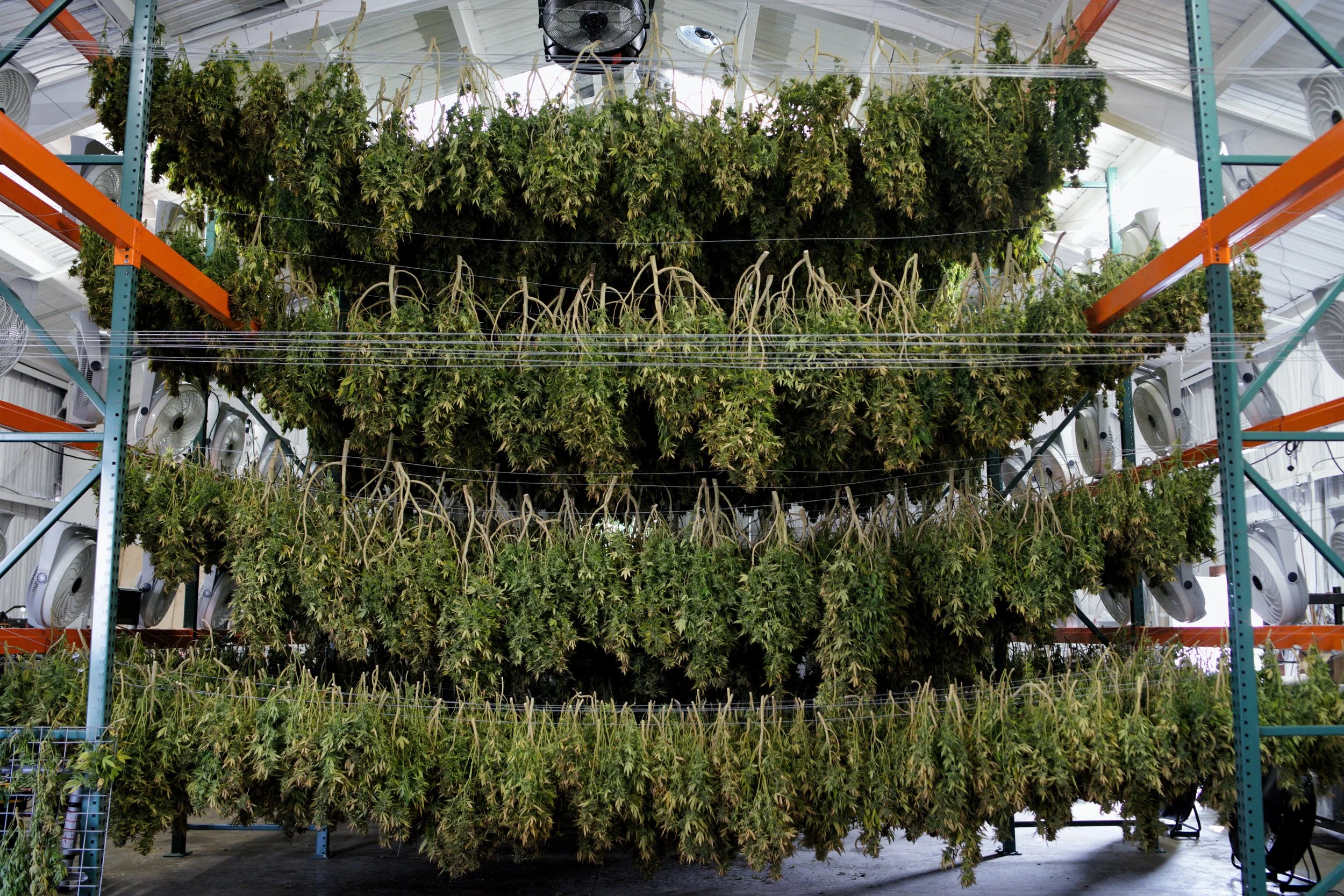
In a serious drying space, fans keep air moving throughout the room without blasting directly onto the flowers. The goal is even air exchange and humidity control, not wind on the buds.
Growing the plant is only half the job. You can spend months dialing in genetics, nutrition, irrigation, light and environment, then lose much of that quality during the first week after harvest.
Freshly harvested cannabis contains a tremendous amount of water, and that moisture has to leave the flower slowly and evenly. If the outside dries much faster than the center, the flower can feel finished before it actually is, and that is where quality problems begin.
Low and slow is the goal.
A good drying environment is cool, dark and controlled. A practical target is roughly 60–68°F (16–20°C) with relative humidity around 55–60%, gentle air circulation and no fan blowing directly on the flowers.
The reason for keeping temperatures down is simple: many of the compounds responsible for cannabis aroma are volatile. They do not suddenly begin evaporating at one specific temperature, but their rate of loss increases as temperatures rise. Lighter monoterpenes are especially vulnerable during drying and curing, while heavier compounds such as sesquiterpenes tend to be more persistent.
That makes 68°F a useful upper target rather than a magic cutoff. If the drying room gets warmer, especially when strong airflow is added, moisture leaves faster and aromatic compounds are more likely to disappear with it.
Drying too fast costs quality.
High temperatures, very dry air or direct fan exposure can pull moisture from the surface of the buds too quickly while the centers remain wetter. The result can be brittle flower with a grassy or hay-like smell, muted aroma and a harsher burn.
The goal is not maximum airflow but controlled air exchange. Air should move gently through the drying space, temperatures and humidity should stay relatively stable, and branches or flowers should be spaced so moisture can escape without creating stagnant pockets.
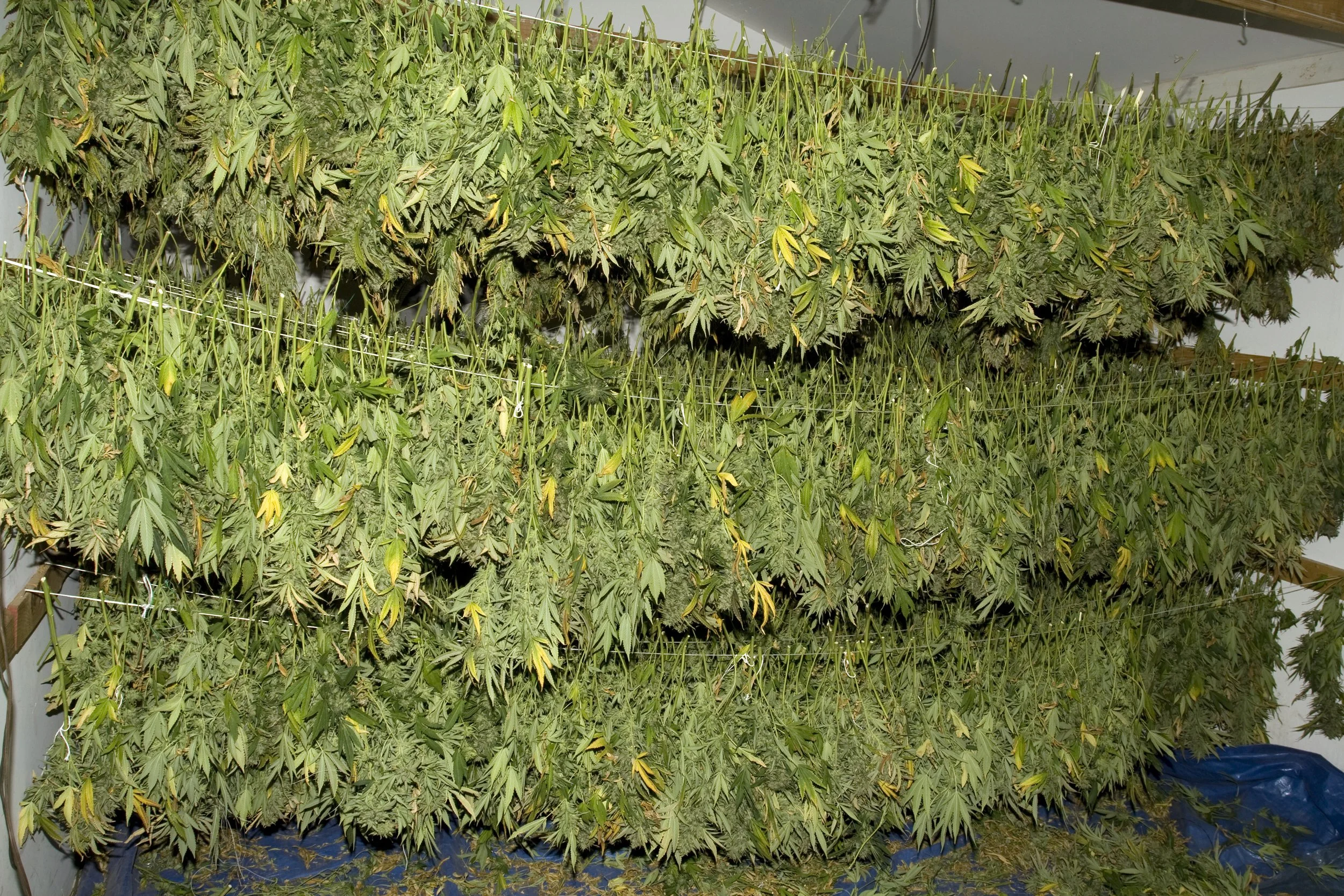
These plants are stacked very tightly during drying, which can trap moisture and reduce airflow between branches. When drying this densely, check the flowers regularly—especially the inner buds and contact points—for dampness, soft tissue or early signs of mold.
Drying too slowly creates a different risk.
Fresh cannabis may contain around 75–80% water by weight at harvest, so there is a great deal of moisture that has to leave the plant before safe storage. If humidity stays too high or circulation is poor, dense flowers can hold moisture deep inside the bud and create favorable conditions for Botrytis and other molds.
That makes inspection part of the drying process. Large, dense flowers should be checked regularly, especially near branch junctions and deep inside the bud where moisture can remain trapped. Brown tissue, unusual softness or a musty smell should be treated as warning signs.
Drying and curing are not the same thing.
Drying removes most of the water from the harvested plant. Curing begins after the flower is dry enough to be stored safely, and during curing the remaining moisture gradually redistributes from the center of the flower toward the outside.
That is why cannabis that feels dry on the surface can become noticeably softer after being placed in a sealed container. If it becomes very soft or damp again, it was probably packaged too early and should be allowed to dry further before remaining sealed.
Think of harvest as a sequence: Grow → Harvest → Dry → Cure → Store. Each stage affects the next, and skipping one can undo a surprising amount of the work that came before it.
The crop is not finished when you cut it down.
A beautiful plant does not automatically become beautiful finished cannabis. The final week can preserve months of work, or it can flatten the aroma, damage texture and create mold problems that were never present in the garden.
Good growers learn how to grow the plant. Great growers learn how to finish it.
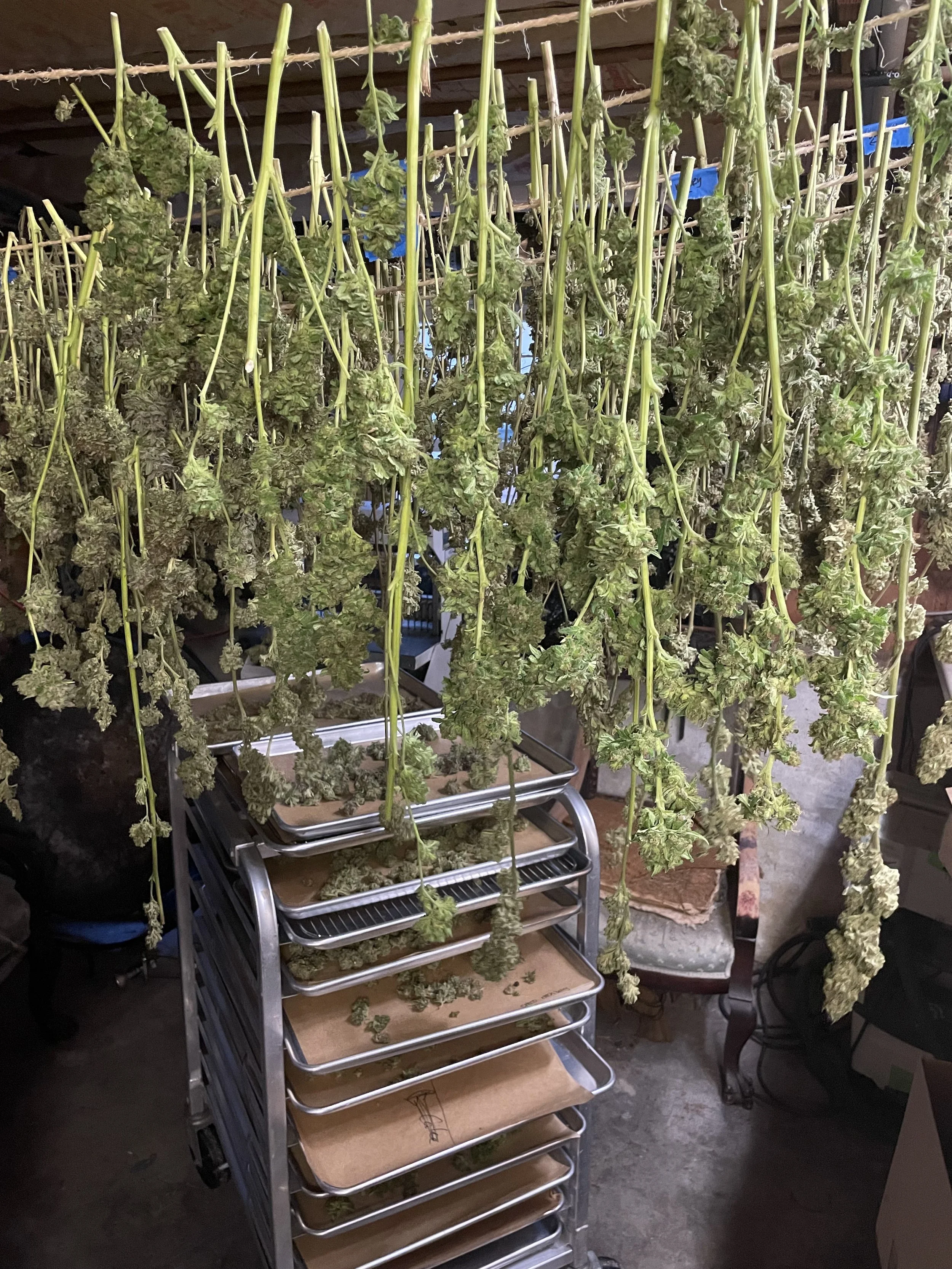
A small basement can work just as well, especially if it naturally stays cool. The key is still the same: darkness, stable temperature, controlled humidity and gentle air movement without fans blowing directly on the flowers.
📘 Want to See How Professional Cultivation Really Works?
Cannabis Training University has free cultivation guides covering grow-room management, environmental control, scheduling and other fundamentals used in professional cannabis production.
Get the free guides:
Browse CTU's free cannabis guides
Question for growers: What was the biggest drying or curing mistake you made when you were learning?